
In Calgary, broken concrete does not belong in a regular garbage bin or a landfill garbage load.
The City’s landfills do not recycle concrete or asphalt, and commercial loads mixed with them are charged a higher disposal surcharge rate of $180 per tonne. Here is where concrete goes instead, and what it costs.
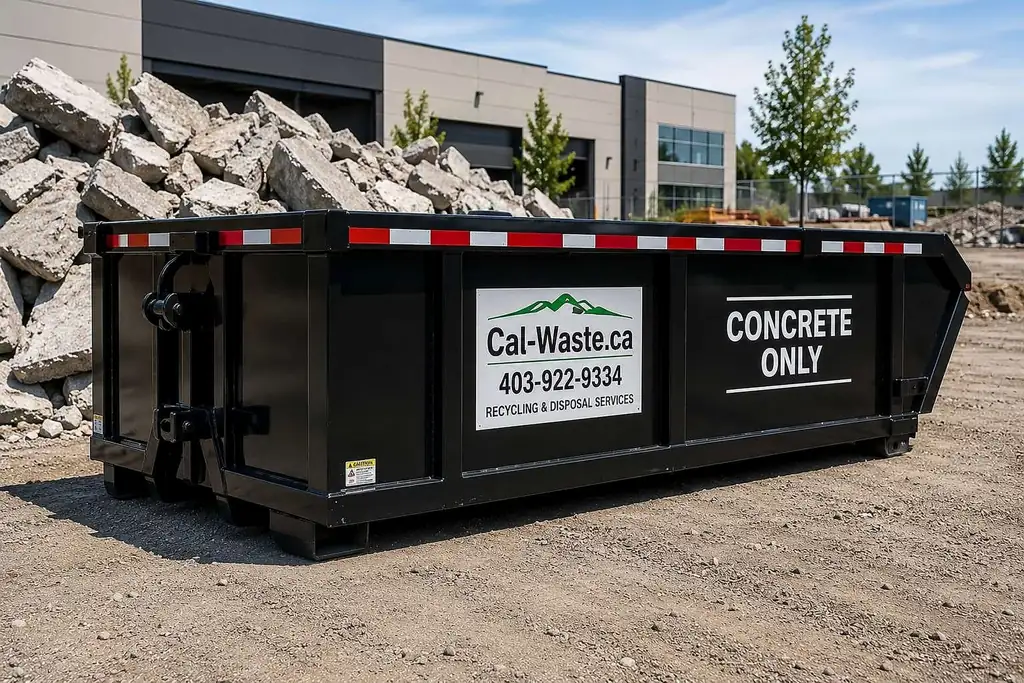
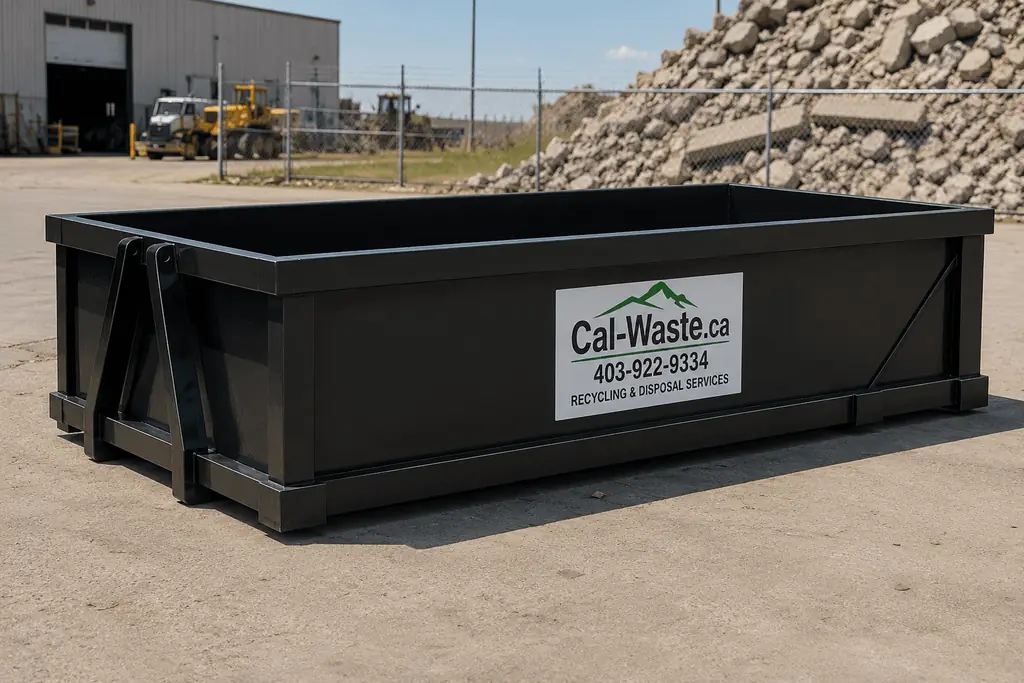
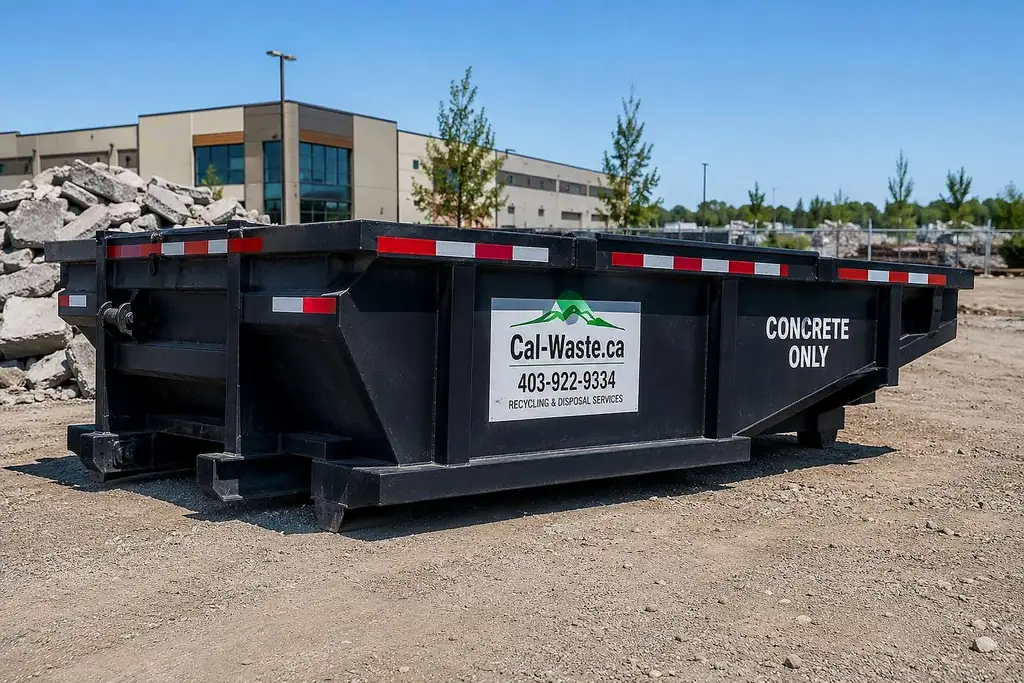
Concrete is heavy. A load that looks small can weigh more than a regular bin is allowed to carry, which is why concrete gets special handling:
You can see the concrete bin and its size on our bin rental page.
For everything else from the same job, such as wood, drywall, packaging and old fixtures, a 12-yard or 20-yard bin is the right fit. Our What size bin do I need? guide helps you choose, and drywall disposal in Calgary explains the rules for drywall.
Small pieces mixed with other debris add a lot of weight and can push a regular bin over its allowance. For more than a few pieces, use a concrete bin.
A Cal-Waste concrete bin is $300 with the recycling fee included. Private recyclers charge by the load or the tonne, so call them for a price.
The City’s landfills do not recycle concrete or asphalt. Commercial loads that contain them are charged the City’s disposal surcharge rate of $180 per tonne.
Yes. Dirt and gravel go in the concrete bin, not a regular bin, because of the weight.
No. Keep the concrete bin to concrete, asphalt, brick, stone, dirt and gravel so it can be recycled. Put wood and other debris in a regular bin.
Tell us about rebar or wire mesh when you book, and we will tell you how to handle it.
Drywall disposal in Calgary: what City landfills charge, how much drywall weighs, and how to load it in a bin.
What City of Calgary landfills charge in 2026 for garbage, drywall and yard waste, and when a bin works out better than hauling it yourself.
Choosing a bin size in Calgary: a 12-yard bin suits one room, a garage or a small roof, and a 20-yard suits a full renovation.